OEM Activewear Manufacturer: Your Full Guide to Custom Sportswear Production
Working with an OEM activewear manufacturer is one of the most direct paths for brands that have clear designs and want complete control over their sportswear collection. At Junhao Sportswear, we specialize in turning buyer-supplied designs into high-quality, performance-ready activewear. This guide explains exactly how OEM production works, what to prepare, and what to expect at each stage—so you can launch your line with confidence.
What Does OEM Activewear Manufacturing Mean?
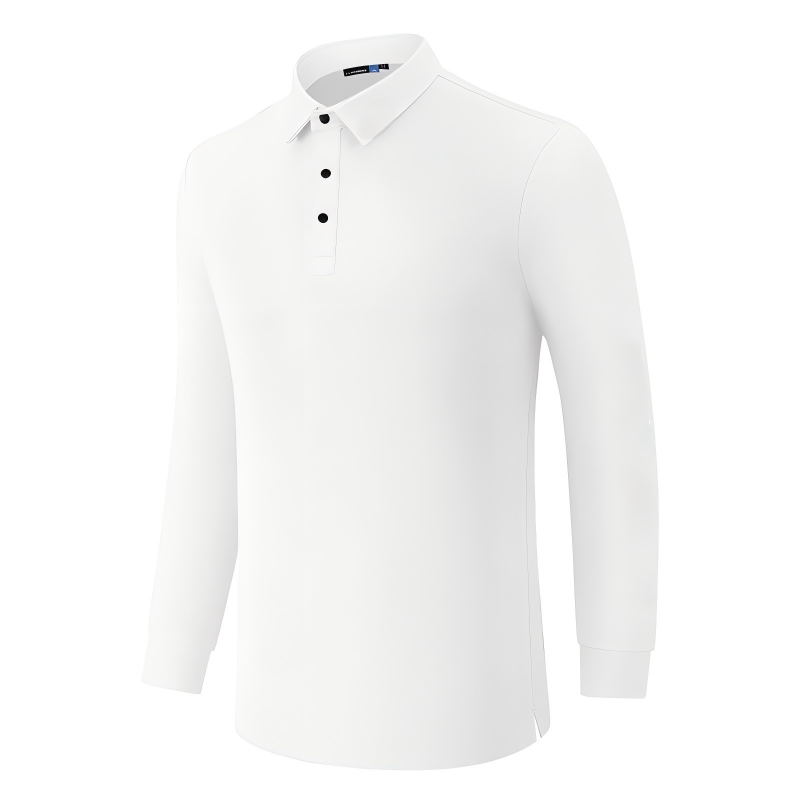
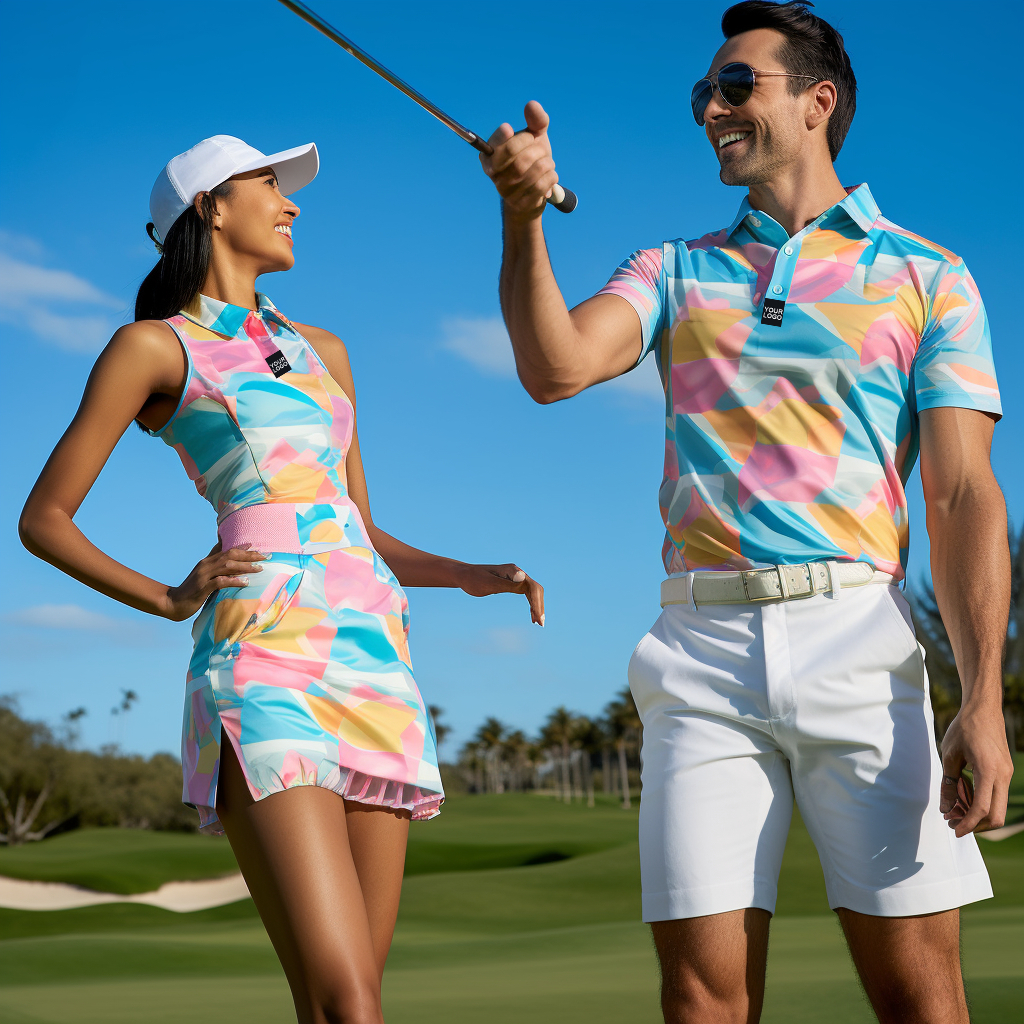 Reference image shows coordinated golf apparel for silhouette assessment, print placement review, and size grading discussion before production.
In the activewear industry, OEM stands for Original Equipment Manufacturer. When you work with an OEM activewear manufacturer, you own the design, the tech pack, and all specifications. The factory’s role is to produce exactly what you’ve designed—no design suggestions, no modifications unless you approve them. This is the preferred model for established fitness brands, athleisure startups with strong design DNA, and companies that already have winning styles and simply need reliable production.
Unlike ODM (where the factory offers ready-made designs) or private label (where you badge existing products), OEM puts your brand’s creative direction at the center. Everything from the fabric blend to the stitching, logo placement, and performance features follows your exact requirements.
What You Need to Prepare for OEM Activewear Production
To get accurate quotes and smooth sampling, a professional OEM activewear manufacturer will expect certain technical materials from you:
- Tech Pack: Detailed flat sketches, measurement charts (graded sizes), construction details, seam types, and stitch specifications.
- Material Specification: Fabric composition, weight (GSM), stretch percentage, moisture-wicking or anti-bacterial requirements, and color codes (Pantone references are standard).
- Trims and Accessories: Zipper types, drawcords, elastic quality, labels, hang tags, and any branded hardware.
- Reference Sample: A physical sample (even a competitor product) helps communicate fit, drape, and finish expectations that drawings alone cannot capture.
- Artwork and Logo Files: Vector files (AI, EPS, or PDF) for screen prints, embroidery, heat transfers, or sublimation designs.
The more complete your package, the faster and more accurately the factory can produce prototypes and final samples.
OEM Activewear Sampling Process and Timeline
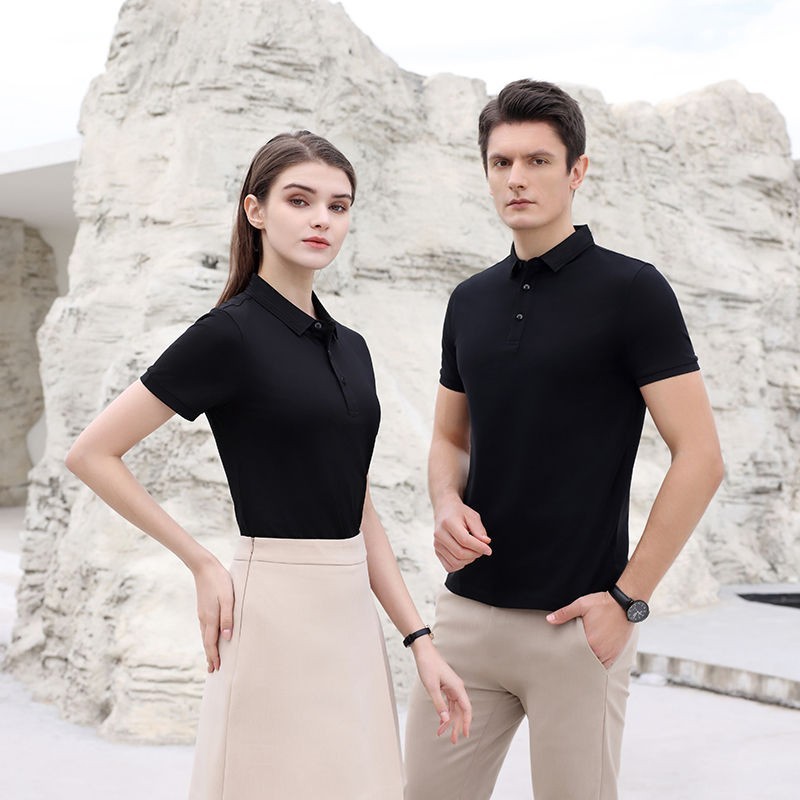
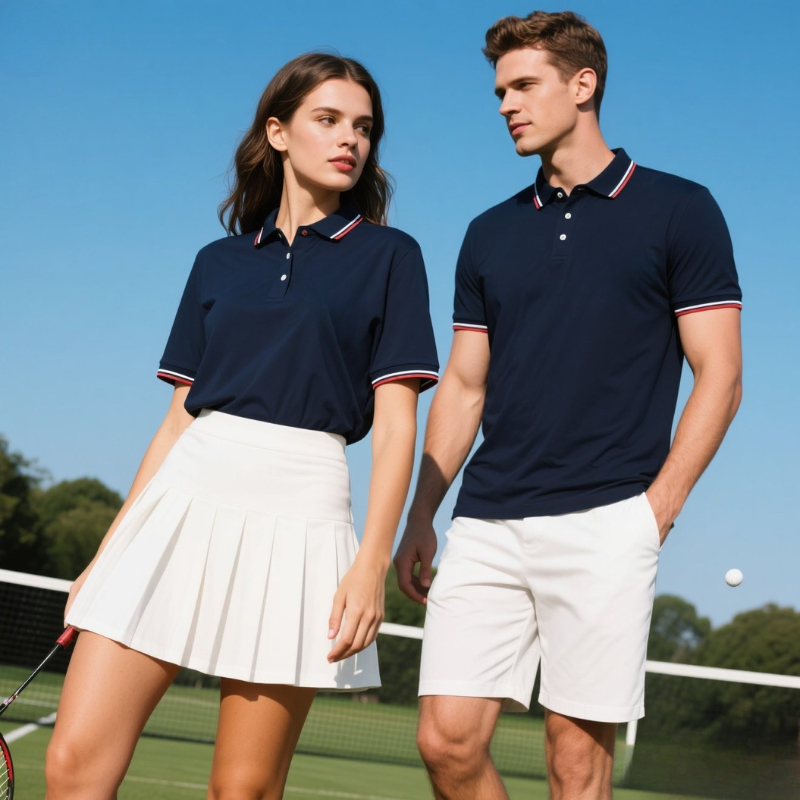 Couple golf apparel sample showing collar rib alignment, sleeve trim placement, and coordinated size grading for production reference.
Sampling is the bridge between your design file and the final product. Here’s how a typical OEM activewear manufacturing sampling workflow looks:
| Sample Stage | Purpose | Typical Timeline* |
|---|---|---|
| Proto Sample | First physical interpretation of your design for fit and design review | 7-14 days |
| Fit Sample | Adjusted version tested on live models for performance and movement | 7-10 days |
| Pre-Production (PP) Sample | Exact final version made with bulk fabrics and trims; this becomes the production reference | 10-15 days |
| TOP (Top of Production) Sample | Pulled from the first bulk production run for final sign-off before full shipment | As production begins |
*Timelines depend on material availability, design complexity, and current factory capacity. Always confirm sampling schedules during the quotation phase.
Fabric and Material Sourcing for OEM Activewear
As the buyer, you decide the fabric—and a good OEM activewear manufacturer will source according to your spec. Activewear demands performance: four-way stretch, moisture management, durability, and often compression. Common OEM activewear fabrics include:
- Polyester-spandex blends (80/20 or 75/25) for leggings and sports bras
- Nylon-spandex for high-compression gym wear
- Recycled polyester for sustainable activewear lines
- Brushed or fleece-backed fabrics for warm-ups and joggers
You can also request functional finishes like UV protection, anti-odor treatment, or water-repellent coatings. The manufacturer will source lab dips and submit for your approval before bulk fabric production begins.
Quality Control Standards in OEM Activewear Manufacturing
Quality isn’t an add-on; it’s built into the OEM process. At each stage, an experienced OEM activewear manufacturer performs checks:
- Incoming Material Inspection: Fabric weight, stretch, color, and handle are verified against your approved swatches.
- Inline Inspection: During sewing and assembly, random pieces are inspected for seam strength, stitch consistency, and logo alignment.
- Final Random Inspection (AQL): Based on acceptable quality limits before packing, a statistically significant sample of finished products is checked for overall construction, measurements, and appearance defects.
If your order requires third-party inspection (SGS, BV, Intertek) or social compliance audits, these can be arranged as part of the production agreement.
MOQ and Pricing: What to Expect from an OEM Activewear Supplier
Because OEM production involves customized fabrics, patterns, and trims, MOQs tend to be higher than ready-made private label orders. For a typical OEM activewear manufacturer, expect MOQs in the range of 300–500 pieces per style per color. Some factories, including Junhao Sportswear, may support lower starting quantities on simpler designs, especially for new brands, but material minimums still apply. Always ask for a detailed quotation that breaks out:
- Sampling fees and refund policies
- Fabric and trim costs
- Labor and production cost per unit
- Packaging and labeling options
- Shipping terms (FOB, CIF, etc.)
Transparent pricing helps you plan cash flow and retail pricing long before production starts.
Packaging, Labeling, and Branding in OEM Production
With OEM, every customer-facing detail can carry your brand identity. From woven labels and hang tags to custom polybags and insert cards, the packaging reflects your brand story. Discuss with your OEM activewear manufacturer:
- Woven labels: Size, material, attachment method
- Hang tags: Design, paper stock, attachment location
- Poly bags: Individual or bulk, with or without brand print
- Care and content labels: Complying with destination market regulations
Correct labeling is critical for retail compliance, especially in the US and EU markets.
How to Evaluate an OEM Activewear Manufacturer
Selecting the right partner affects your entire supply chain. Look for a OEM activewear manufacturer that demonstrates:
- Proven experience in activewear categories similar to yours (compression, yoga, running, gym)
- Clear communication in English, with technical understanding of garment construction
- Willingness to sign an NDA to protect your original designs
- References or case studies from brands at your stage (startup, growing, or scaled)
- Transparent sampling timelines and factory floor access for inspections
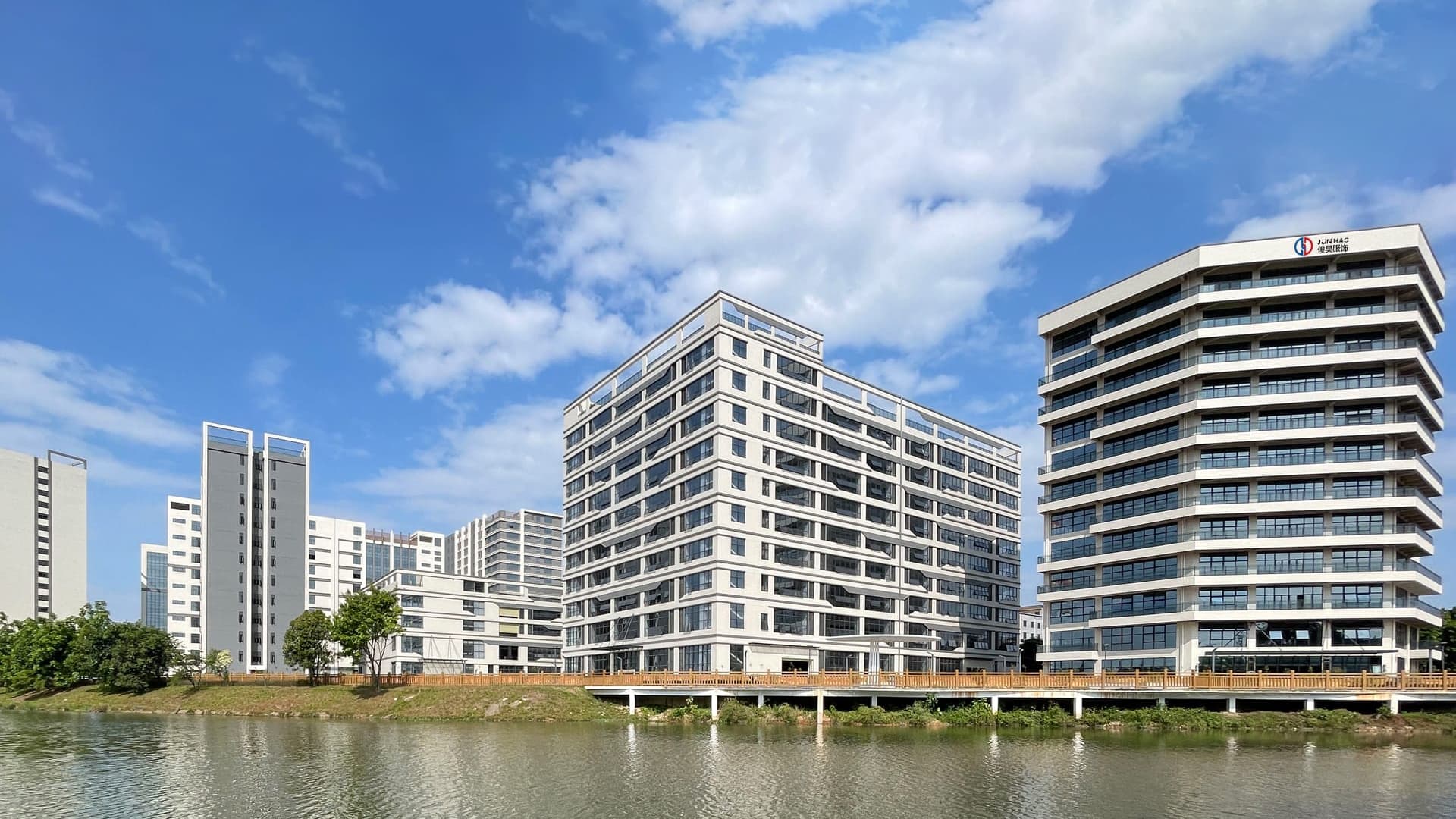
At Junhao Sportswear, we encourage clients to visit our facility or schedule video calls to review production lines. Transparency builds trust—and trust is the foundation of long-term OEM partnerships.
FAQ: OEM Activewear Manufacturing
What is an OEM activewear manufacturer?
An OEM (Original Equipment Manufacturer) activewear manufacturer produces sportswear based on buyer-supplied designs, tech packs, or physical samples. The factory follows exact specifications without providing design input, making it ideal for brands with in-house design capabilities seeking full control over product aesthetics and performance features.
What information do I need to provide to an OEM activewear manufacturer?
You typically need to provide detailed tech packs with measurements, material specifications, construction details, trims, and reference samples. Clear design files, artwork for prints, and pantone colors for fabrics and logos help ensure accurate sampling and bulk production matching your vision.
How many samples are required before OEM bulk production?
Most OEM activewear production involves at least two sampling stages: proto samples for initial fit and design review, and pre-production (PP) samples that serve as the exact reference for bulk manufacturing. Some projects may require multiple iterations, depending on design complexity and fit requirements.
What is the typical MOQ for OEM activewear manufacturing?
MOQs vary depending on fabric type, customization level, and production complexity. For basic OEM activewear, MOQs often start around 300-500 pieces per style per color. More specialized performance fabrics or intricate constructions may require higher minimums to be cost-effective.
Can I use my own fabrics and trims in OEM production?
Yes. Many OEM activewear manufacturers accept buyer-supplied fabrics and trims, provided they meet the factory’s production requirements and quality standards. You can ship approved materials to the factory; just coordinate delivery schedules and minimum quantities with the production team.
Partner with a dedicated OEM activewear manufacturer that treats your designs like its own. Contact Junhao Sportswear today with your tech pack or sample inquiry, and let’s start building your next collection.