Activewear Quality Control Checklist for B2B Buyers
Sourcing high-quality activewear requires more than just good designs. Quality control (QC) is the backbone of every successful activewear brand. Without it, you risk delayed shipments, customer returns, and damage to your reputation. This activewear quality control checklist outlines the essential steps for B2B buyers to ensure your sportswear meets durability, performance, and aesthetic standards before it reaches your customers.
1. Define Your Quality Standards Before Production
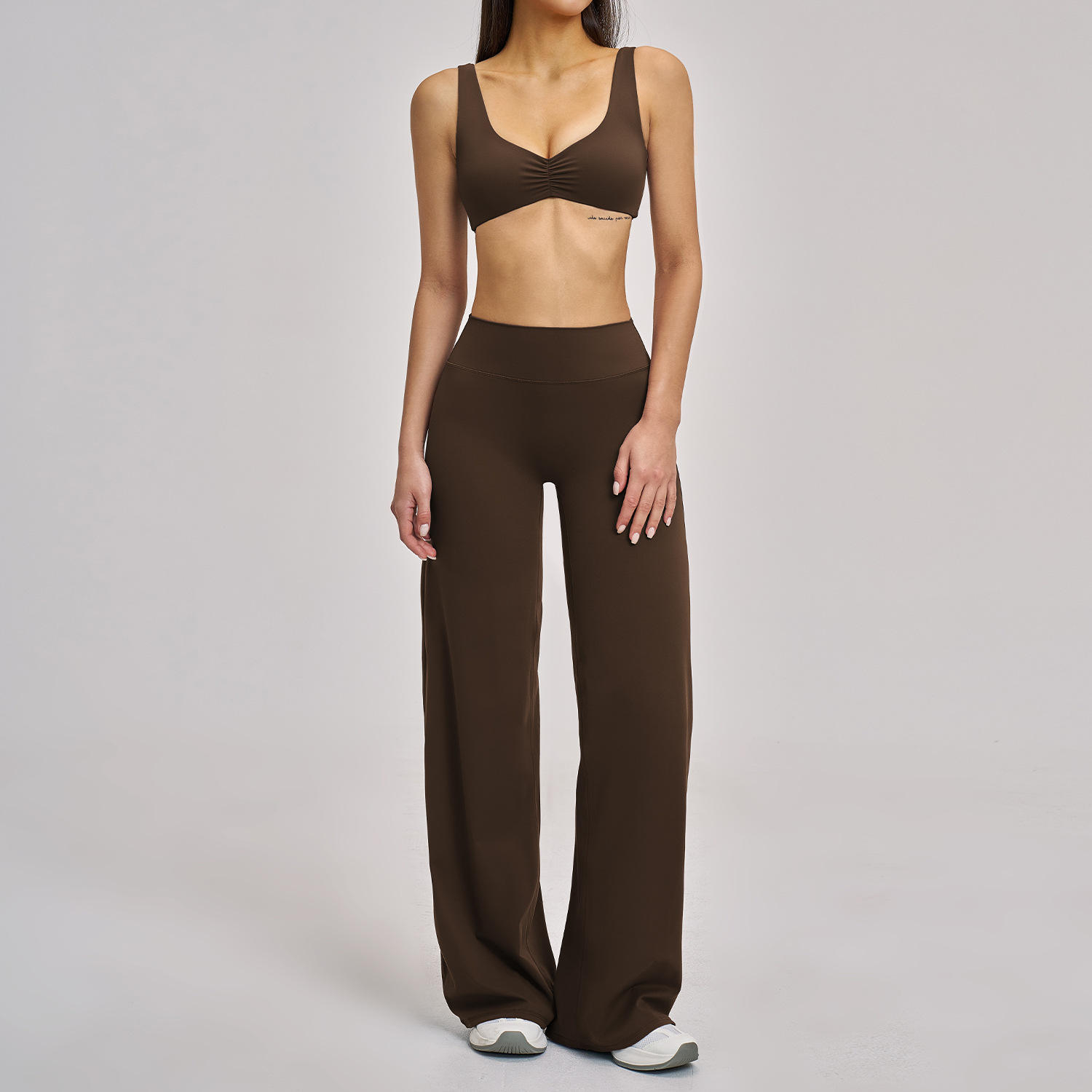
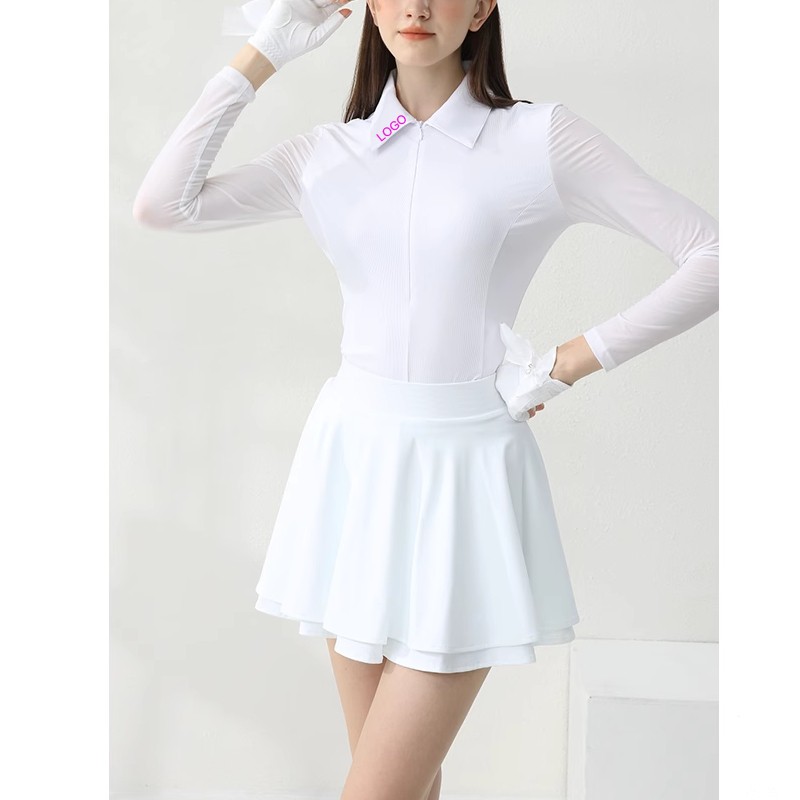
 The image records garment structure, collar alignment, armhole finishing, and pleated skirt consistency for sportswear sample verification.
Before any fabric is cut, you and your manufacturer must agree on clear, measurable quality benchmarks. These should be documented in a tech pack or quality agreement. Key parameters include:
- Fabric specifications: weight, composition, stretch percentage, moisture-wicking capability.
- Colorfastness: minimum rating under ISO 105-C06 (for washing) and ISO 105-X12 (for rubbing).
- Seam strength: acceptable force (e.g., ASTM D1683 for woven seams).
- Print durability: adhesion after stretch (usually 30-50% elongation without cracking).
- Fit tolerance: +/- 0.5 inch for key measurement points.
Our customization service helps establish these standards early, reducing misunderstandings later.
2. Incoming Material Inspection: Fabric and Trims
Quality starts with raw materials. For activewear, the most critical component is performance fabric. Always conduct the following checks upon material arrival:
- Visual inspection: Check for holes, stains, color shading, or weaving defects.
- Shrinkage test: Wash a fabric swatch at the recommended temperature and measure the change. Activewear should have minimal shrinkage (typically under 3%).
- Pilling resistance: Use a Martindale tester (ISO 12945-2). Activewear should withstand at least 2,000 cycles.
- Stretch and recovery: For spandex blends, the fabric must return to near original dimensions after 30% stretch.
- Trim inspection: Zippers, drawstrings, and elastics should be tested for functionality and durability (e.g., zipper cycling test, elastic stretch test).
3. Inline Production Quality Checks
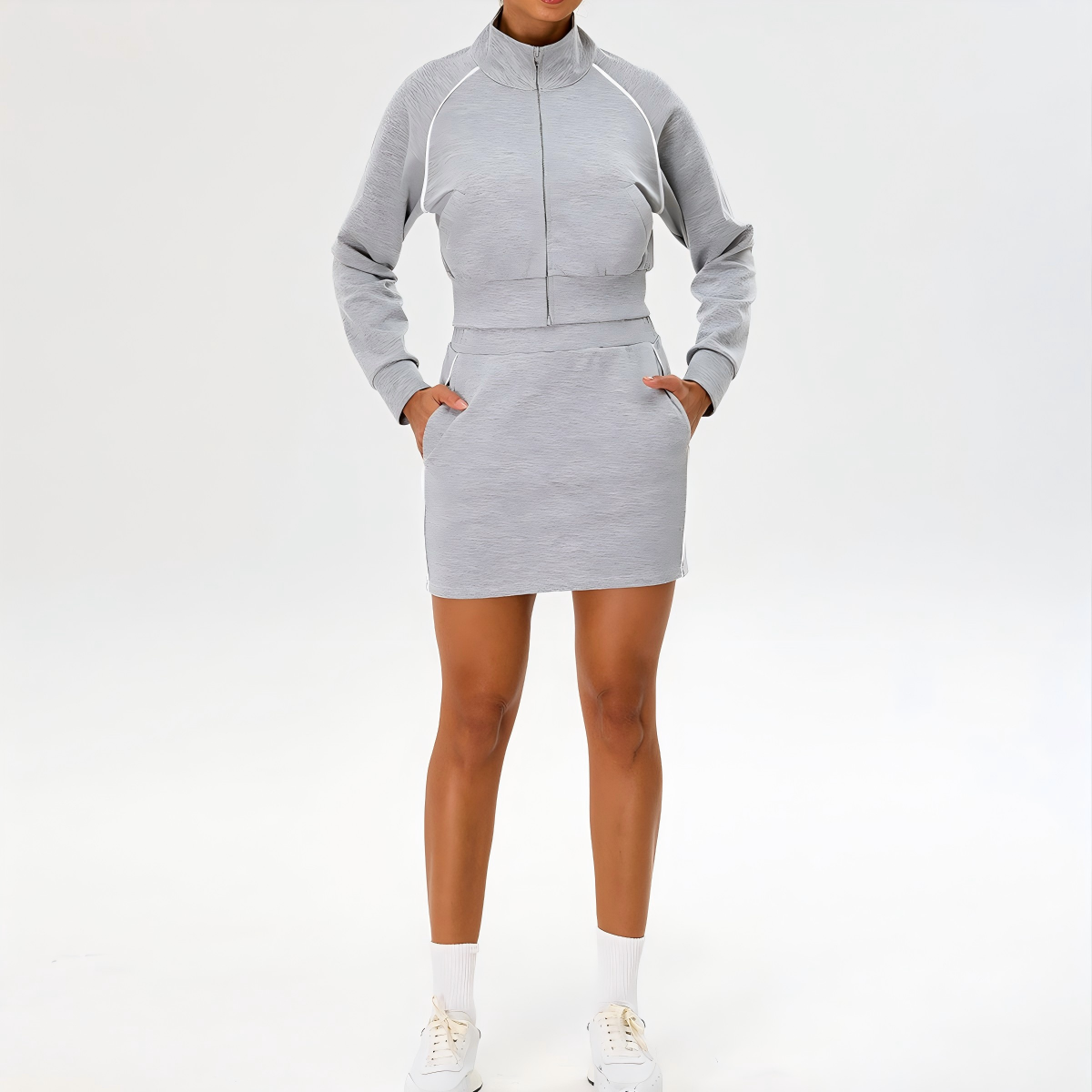
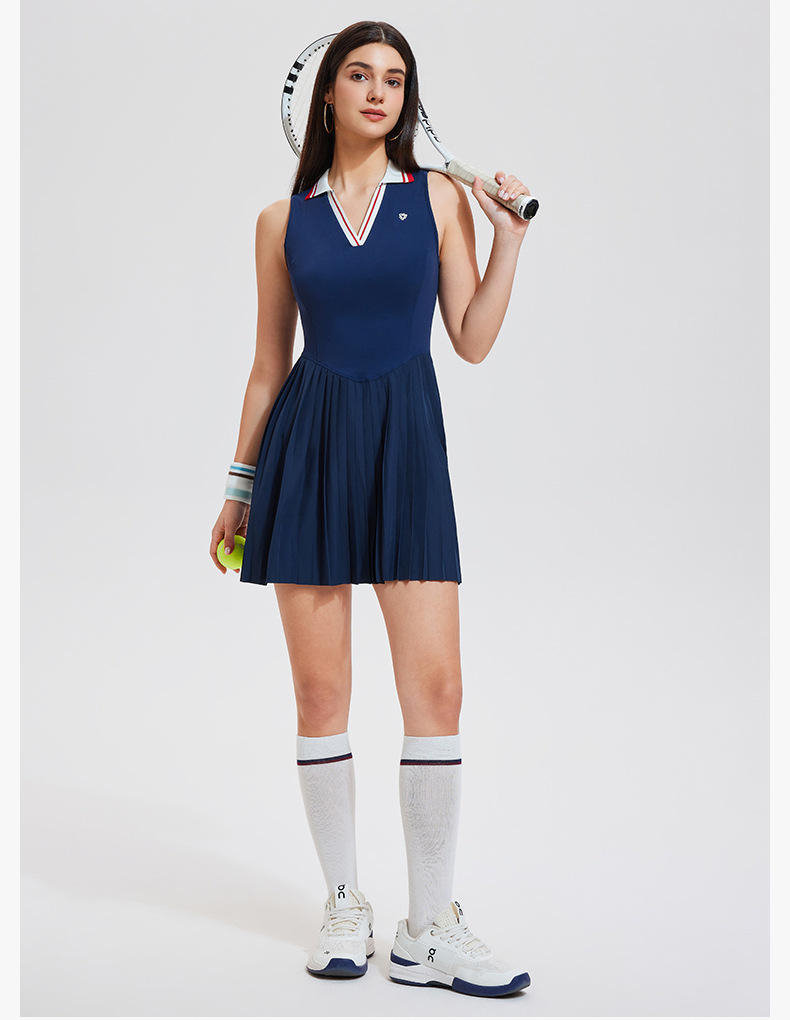 Studio sample image supports garment fit assessment, collar alignment review, and pleated skirt consistency checks before bulk sportswear production.
Do not wait until the final shipment to inspect goods. Inline checks catch defects early, saving time and money. We recommend inspections at 10-20% completion of each production stage:
- Cutting accuracy: Verify pieces match patterns exactly.
- Stitching quality: Check for skipped stitches, uneven seam allowances, and proper thread tension (10-12 stitches per inch for knit fabrics is common).
- Print/embroidery placement: Ensure logos are centered, sized correctly, and free of distortion.
- Seam strength: Perform a random pull test. For activewear, 4-way stretch seams need extra reinforcement.
4. Pre-Shipment Inspection Using AQL Sampling
The final random inspection (FRI) is your last chance to catch systemic issues. Use the Acceptable Quality Limit (AQL) system to determine how many pieces to inspect based on your order size. Common AQL levels for activewear:
- Critical defects (0 AQL): Sharp edges, wrong size label, hazardous loose parts. Accept 0 units with this defect.
- Major defects (2.5 AQL): Visible seam holes, print fading, zipper malfunction. Up to 2.5% of inspected units may have this defect.
- Minor defects (4.0 AQL): Loose threads, slight color variation, light creases. Up to 4.0% of inspected units may have this defect.
Create a checklist for the inspector that covers:
- Visual appearance: Stains, misprints, color mismatch against approved sample.
- Measurements: Compare key points (chest, length, sleeve) to spec sheet.
- Functionality: Zippers, drawcords, pockets.
- Labeling: Care labels, brand labels, country of origin tags.
- Packaging: Polybag sealing, folding method, barcode placement.
For detailed support, contact our team to coordinate an inspection.
5. Testing for Performance and Safety Compliance
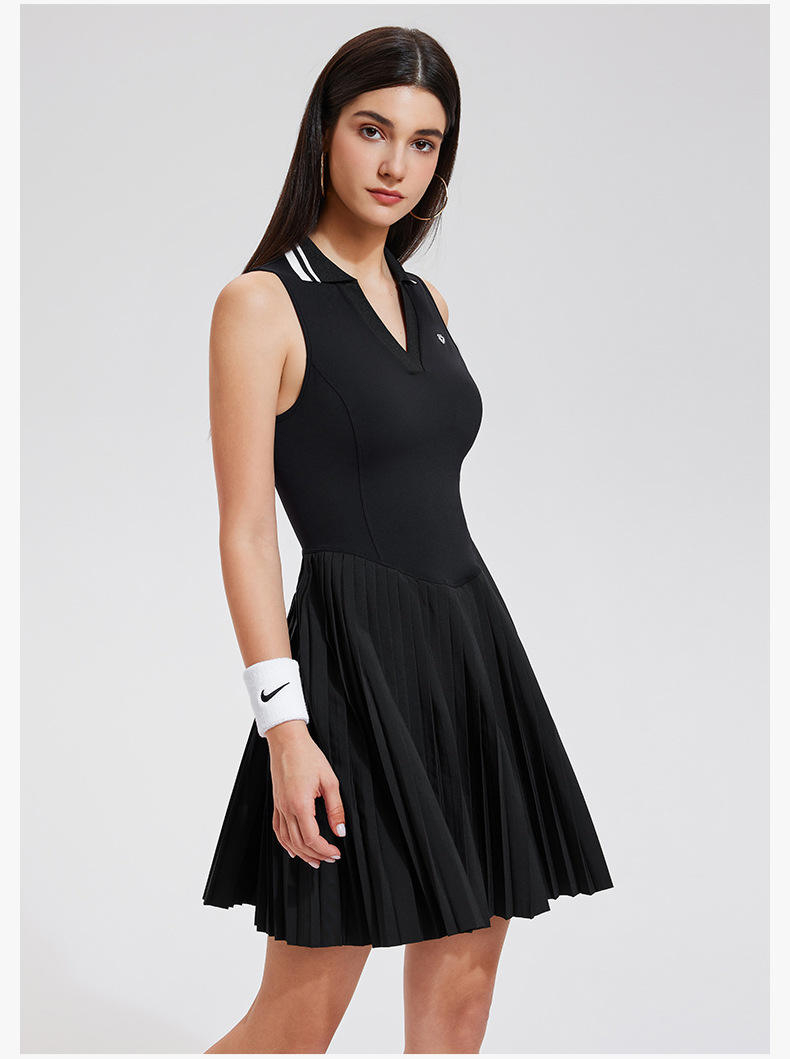
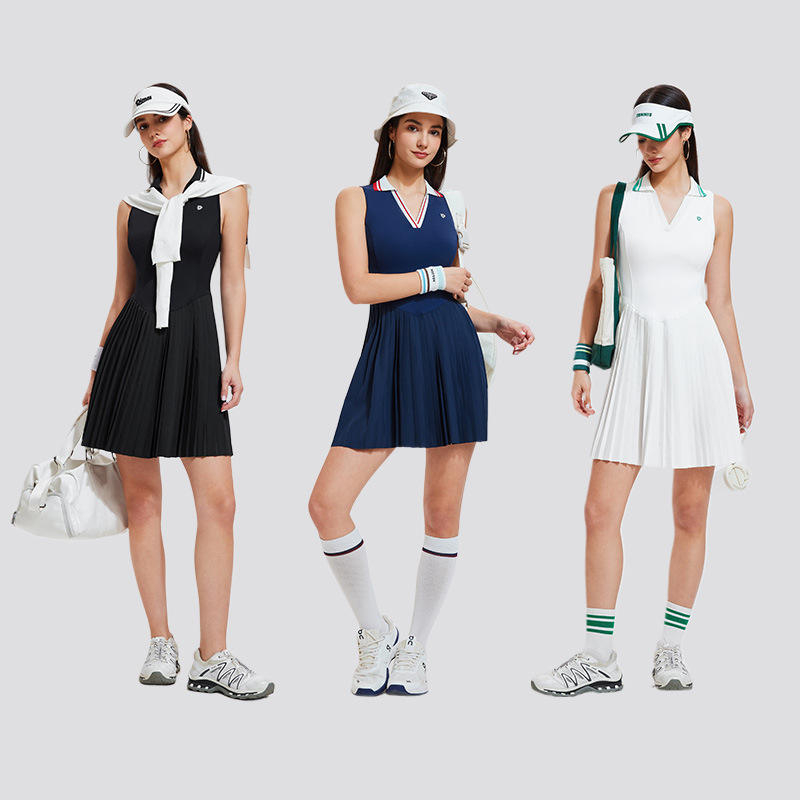 Three sleeveless tennis dress samples support silhouette comparison, pleat consistency checks, and pre-production sample review for sportswear manufacturing.
Depending on your target market, activewear may need to meet specific safety and performance standards. Common tests include:
- Flammability: 16 CFR Part 1610 for general wearing apparel in the US.
- Lead and phthalates: CPSIA requirements for children’s sportswear.
- Formaldehyde: Check if your fabric meets Oeko-Tex Standard 100 limits.
- UV protection: For outdoor activewear, test UPF rating.
Request lab test reports from the manufacturer, and consider independent third-party testing if your brand requires certification. See how we handle compliance in our expertise.
6. Common Activewear Defects to Watch For
Based on factory experience, these are frequent QC issues with activewear:
- Seam slippage: Under tension, seams open up, especially in high-movement areas like underarms.
- Print cracking: Especially on stretch fabrics if incorrect inks are used.
- Color bleeding: Dark colors transferring onto lighter trims after washing.
- Twisting: Garment body skews after washing due to improper fabric relaxation.
- Zipper corrosion: Metal zippers used for activewear should be anti-rust coated.
FAQ
What are the key quality checks for activewear fabric?
Key fabric checks include testing for colorfastness, shrinkage, pilling resistance, and breathability. For activewear, also verify stretch recovery and moisture-wicking performance. Always request lab test reports and conduct your own visual inspection upon sample receipt.
How do I ensure activewear prints and logos don’t fade?
To avoid fading, specify durable printing methods like sublimation or high-quality screen printing. Request wash fastness and crocking tests. Examine print adhesion under stretch, and set a clear quality standard for color matching before production.
What should I check during a pre-shipment inspection of activewear?
Pre-shipment checks should cover visual defects, measurement against spec, seam strength, functional trims (zippers, drawstrings), and correct labeling. Use the AQL sampling method to determine sample size and acceptable defect limits based on your order quantity.
How can I improve activewear quality when working with a manufacturer?
Clear communication is vital. Provide detailed tech packs, reference samples, and a written quality control checklist. Conduct inline inspections during production, not just at the end. Building a long-term partnership with an experienced factory also helps maintain consistent quality.
Ready to implement your own activewear quality control checklist? Contact Junhao Sportswear to discuss your sourcing needs and learn how our QC process supports your brand.